


Ο Θεοφάνης ο Έλληνας έζησε τον 14ο αιώνα , την εποχή που στην Βασιλεύουσα αλλά και τη Ρωσία διαδραματίζονταν καθοριστικά ,για τις δύο χώρες, γεγονότα. Η προρωσική του περίοδος παραμένει ακόμη και σήμερα σκοτεινή. Γνωρίζουμε όμως κάποιους σταθμούς στη πορεία του, την Κωνσταντινούπολη, τη Χαλκηδόνα, τον Γαλατά και την Κάφφα. Η εργασία του όμως εκεί μας είναι άγνωστη. H συνολική έκταση της εργασίας του είναι πολύ μεγάλη. Δυστυχώς, όμως, πολύ λιγότερη έχει εκτιμηθεί και διασωθεί.
Τα τραγικά πολιτικά δρώμενα στη Βασιλεύουσα, την εποχή εκείνη, σημάδεψαν τη ψυχή του Έλληνα καλλιτέχνη και αυτός έγινε ο τραγικός προφήτης της Αλώσεως, καθώς οι ίδιες οι μορφές των αγίων του, μαρτυρούσαν αυτό που θα ερχόταν. Ο Θεοφάνης έφτασε στο Νόβγκοροντ, τον 1ο σταθμό του στη Ρωσία, γύρω στο 1378, όπου ιστόρησε την εκκλησία της Μεταμορφώσεως του Σωτήρος.
Την τέχνη του την βλέπουμε και σε άλλες εκκλησίες, όπως αυτή του αγίου Θεοδώρου του Στρατηλάτη και της Κοιμήσεως της Θεοτόκου , στο πεδίο του Βολοτόβο. Σταθμός στην καλλιτεχνική του δημιουργία υπήρξε η Μόσχα, όπου το 1405 ζωγράφισε την εκκλησία του Ευαγγελισμού της Θεοτόκου, όπου μαζί του εργάστηκαν ο Πρόχoρος από το Γκοροντές και ο Αντρέι Ρουμπλιόφ. Ο Θεοφάνης εκτός από τοιχογραφίες , αγιογραφούσε και εικόνες. Χαρακτηριστικό δείγμα της καλλιτεχνικής του δημιουργίας, υπήρξε το τέμπλο του καθεδρικού αυτού ναού. Ο Έλληνας καλλιτέχνης εκτός από ζωγράφος υπήρξε και μικρογράφος. Υπάρχουν πολλά Ευαγγέλια που φανερώνουν την τέχνη του. Ο Θεοφάνης ήταν είδη ολοκληρωμένη καλλιτεχνική προσωπικότητα όταν έφτασε στη Ρωσία.
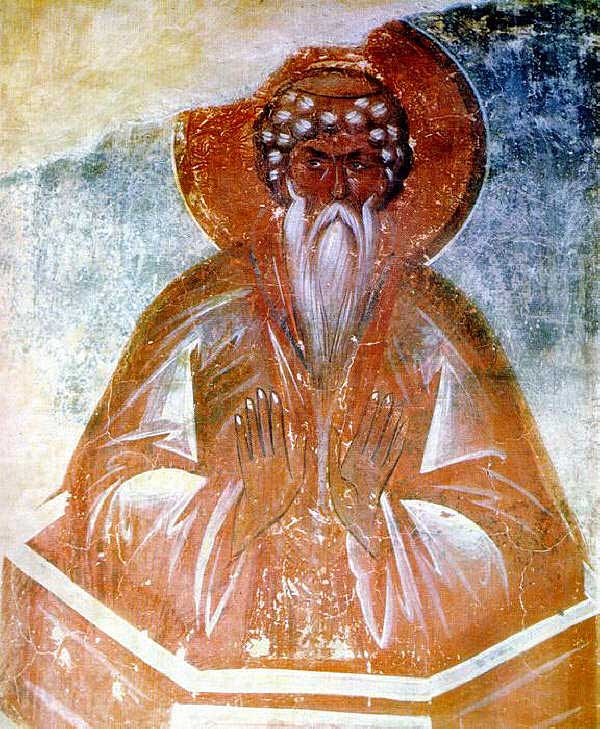
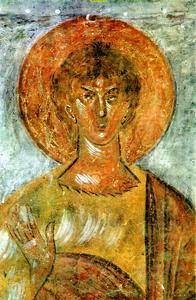
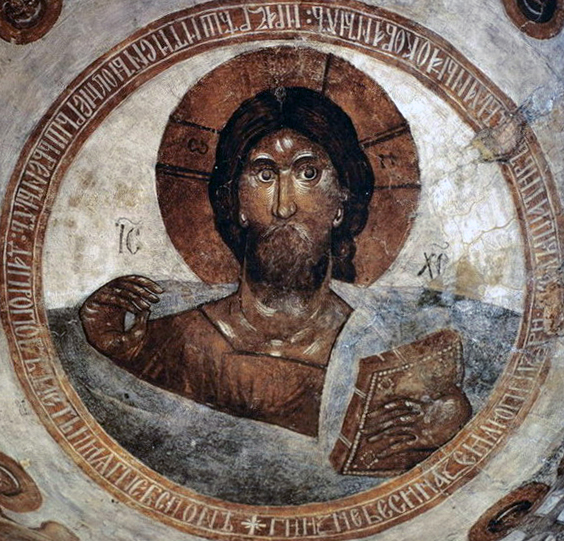
Το ανήσυχο και ασυμβίβαστο πνεύμα του τον έκανε ορμητικό και ανικανοποίητο καλλιτέχνη. Η ζωγραφική του είναι οξεία, διαπεραστική και αποφασιστική. Η εκπληκτική αυθεντία με την οποία δημιουργεί τα ενεργητικά του λευκά φωτίσματα- ψυμιθιές, χαρακτηρίζουν τη Θεοφάνειο μοναδικότητα. Ο ιμπρεσιονισμός των μορφών του είναι εκπληκτικός. Οι μορφές των αγίων του ήταν γεμάτες τραγικότητα και συνεχή αγωνία. Ο ζωγράφος δεν ενδιαφέρεται να αποδώσει την ηρεμία και την ιλαρότητα με την οποία διακρίνονται οι άγιοι, αλλά θέλει να δείξει ότι έγιναν άγιοι διαμέσου της συνεχής πάλης και των δοκιμασιών. Είναι γεμάτοι από πνευματική ένταση. Αυτή είναι η αξία και η πραγματικότητα, την οποία έχει ο καλλιτέχνης έχει καταφέρει με την μοναδική του τέχνη.
Ο Θεοφάνης υπήρξε η πηγή έμπνευσης για πολλούς Ρώσους καλλιτέχνες. Όποιος τον γνώριζε, δεν μπορούσε να μην γοητευτεί και να μην θαυμάσει την προσωπικότητά του. Αυτό άλλωστε, το βλέπουμε και στον Επιφάνιο, τον άνθρωπο ο οποίος υπήρξε φίλος και θαυμαστής του και από τον οποίο παίρνουμε τις περισσότερες πληροφορίες. Ο Αντρέι Ρουμπλιόφ ήταν ένας από εκείνους που γνώρισαν το έργο του, διδάχτηκαν τη Βυζαντινή τέχνη και αφομοίωσαν πολλά από την καλλιτεχνική του δημιουργία. Ο Έλληνας ζωγράφος άφησε στους Ρώσους μια καλλιτεχνική κληρονομιά, την οποία οι μαθητές της σχολής του και οι βοηθοί του, αξιοποίησαν, ο καθένας με τον δικό του τρόπο.
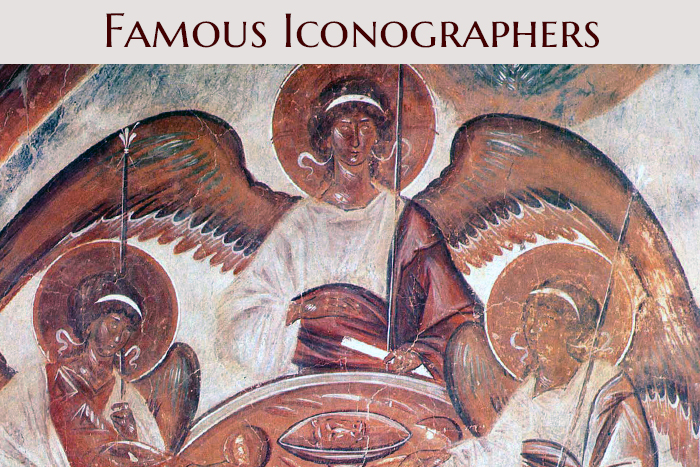
Theophanes the Greek
The development of Russian culture in the Middle Ages is characterized
by the active development of church architecture.
Newly built temples had to be decorated with interior decoration.
As early as the second half of the 14th century, many outstanding painters of Byzantine
and Balkan origin who had been trained in the workshops of Constantinople and
Thessaloniki arrived in Moscow, Novgorod, probably in Pskov and perhaps in other major
cities of Russia. They introduced sophisticated painting techniques, and Russian iconographers
were adopting these techniques, learning from the Byzantines and helping them to create large
paintings.
The names of a few of these teachers have survived to date, including that of Theophanes the
Greek.
He was born in Byzantium (hence the nickname Greek), and before coming to Russia he had
worked extensively in Constantinople, Chalcedon (a suburb of Constantinople),
the Genoese Galata and Caffa (now Theodosia in the Crimea), developed there as an artist
and gained a reputation. Theophanes came to Russia not as an ordinary artist,
but as a famous maestro, a genius in his field.
It is quite difficult for a contemporary person to imagine how an iconographer’s workflow was
actually organized at that time. One can imagine that the work was executed by some silent
and focused monks. Surprisingly, however, according to the extant memoirs of
Theophanes the Greek’s contemporaries, Theophanes’s creativity and imagination were so
striking that they wrote about him, “When he [Theophanes the Greek] was drawing or
painting all those images, no one ever saw him stare at the samples, as some of our
iconographers do. They are constantly confused and refer to the samples all the time,
looking back and forth. Apparently, they look at the samples more than they actually paint
the icon. [Theophanes] did paint icons but he was constantly walking, talking to the visitors
and thinking about the noble and the wise matters at the same time, while his eyes were
in persistent scrutiny of the mind and its goodness.”
Theophanes’s style is characterized by temperament, sharpness,and impetuosity.
First of all, he is a painter and he shapes his figures with energetic, bold strokes, adding
bright glare to them, which makes the faces flutter and highlights the intensity
of their expression. The art of Theophanes the Greek may be regarded as the most
comprehensive manifestation and the perfect embodiment of the two poles of Byzantine
spiritual life as reflected in culture: the antique principle of the glorification of earthly
beauty as a Divine creation and as a reflection of the highest excellence versus
the pursuit of asceticism, which rejects the external, the glamorous, and the attractive.
Hence, his color palette tends to be minimalistic and reserved, but the colors are saturated
and intense, all the while the brittle sharp lines and the complex rhythm of the
composition further reinforce the overall expressiveness of the images.
The works of Theophanes the Greek are conventionally divided into two periods: his work
in Novgorod and his work in Moscow. It is known that Theophanes the Greek also took
part in painting dozens of churches in Russia. He painted a number of icons and also
created book miniatures (e. g., he is credited with the illustrations in the Gospel of Fedor
Koshka and the miniatures in the Khitrovo Gospels). His most famous works are the
Church of the Transfiguration of the Savior on Ilyina Street in Novgorod
(we know for a fact that the work was made by him), as well as St. Michael
the Archangel Cathedral and the Annunciation Church of the Kremlin.
A chronicle has it that he painted the latter church together with Andrey Rublev and Prokhor
of Gorodets.
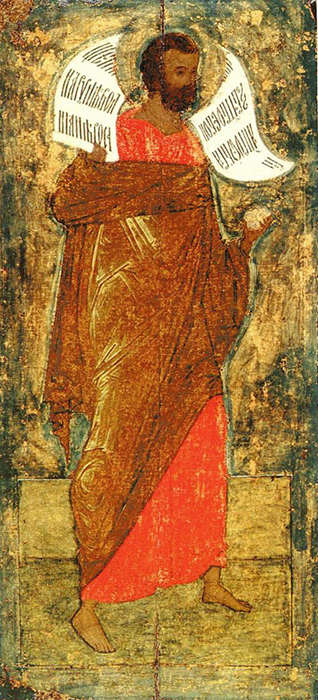
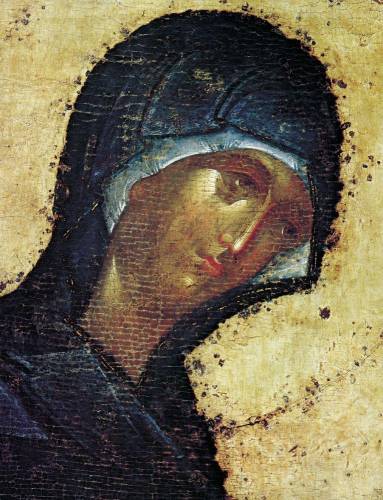
There is an iconostasis in which Theophanes the Greek painted the deesis part.
The brilliance and outstanding manner of the Greek showed itself with amazing power.
The central image of the Savior has been less preserved than others, but the skill
and virtuosity of the iconographer is still evident: Jesus sits on the throne in white robes emblazoned
with gold hatching,
while John the Baptist and the Blessed Virgin are praying to Him. The most expressive
image is that of the Mother of God who wears a deep-blue garment with subtle
pale-blue flashes that shimmer in darkness. This color is reminiscent of a sapphire,
a precious stone that symbolizes the mystery of the Ever-Virgin. Her elongated figure
looks like a candle, and the face of the Virgin Mary is the flame of that candle.
The light is streaming out of her eyes softly and at the same time energetically.
Not much is known about the icons painted by Theophanes the Greek.
Artists usually did not sign their works in ancient times. Nevertheless, there are several
icons attributed to him. One of them is the icon of the Transfiguration from
Pereslavl-Zalessky. The icon is big (184×134 cm) and impressive. Jesus Christ is
portrayed standing on top of a mountain, while his disciples are on the ground frightened
and trembling. The Savior is surrounded by radiant glory; golden rays emanate from Him.
The light penetrates the scene, blowing up everything from the inside, essentially making
the traditional caves on the hills look like funnels of an explosion. The miracle of the
Transfiguration is shown as a cosmic event that turns the universe upside down, transforming
the whole creation.
Traditionally, the art of Theophanes the Greek is associated with the Russian culture
but he still was and is a Byzantine Greek, both as a thinker and as an artist.
Art historians may argue whether Theophanes was the teacher of Andrey Rublev or not,
but at any rate they used to work together, which could not but affect the formation
of a younger painter who would set the course for Old Russian art after the decease
of the great Theophanes the Greek.


Δεν υπάρχουν σχόλια:
Δημοσίευση σχολίου
Αφήστε το σχόλιό σας